This report contains a broad summary of the presentations and opinions presented at the conference, and the views contained in the report may not fully reflect the official views of the Ankara Governorship Provincial Directorate of Migration Management and the Research Centre on Asylum and Migration (IGAM) or the organizations to which the participants are affiliated.
Turkey has been hosting four million refugees as of June, 2019. Although the entries to the country, voluntary returns and placements in a third country are ongoing in relatively small numbers, this critically huge humanitarian problem of displacement has become long term. It has been exactly nine years since the start of the flux of the individuals who only fled from Syria and requested protection from Turkey (date of the first entries was 29 April 2011). As historical records were statistically broken, the developments in Syria as the core reasons of the problem, resulted in the extension of the load on the neighboring countries like Turkey and Lebanon, Jordan and Iraq to a period close to ten years. As time goes by, this historical forced migration gained new dynamics in the host communities and other places in the world, and it continues to do so at present. Although we can be sure that the overwhelming majority of the refugees will return to their country when a solution within the scope of international guarantees is provided, that is acceptable to the whole Syrian community, there is an increasing need for an environment in which social harmonization is built and co-existence culture is developed in the period up to the time when the conditions thereto are made available. With these ideas and assumptions in mind, the Government of the Republic of Turkey considers policy shifts in the sectors of education, language learning, employment, accommodation and social acceptance, taking into consideration the realities in the field. In this respect, harmonization strategy document was developed and the year 2019 was declared the “Harmonization Year”.
Social harmonization is a multi-faceted process which also takes time. Acceptance and harmonization of the differences between the cultural habits of the refugees and the individuals of the host community require great effort. There are close ties between the components of a good harmonization strategy. Employment is one of the most important elements of the registered harmonization to the labor market. Despite quite significant steps taken in this field, employment of a community of four million is an extremely challenging, almost impossible situation even for the most developed economies. Constant effort must be exerted to overcome this problem. Achievement in the employment of refugees will bring their potential to the fore and help them and their families to economically survive in a way that is compatible with human dignity and ensure their development. Also, they will contribute to the economic development and stability of the host community and country.
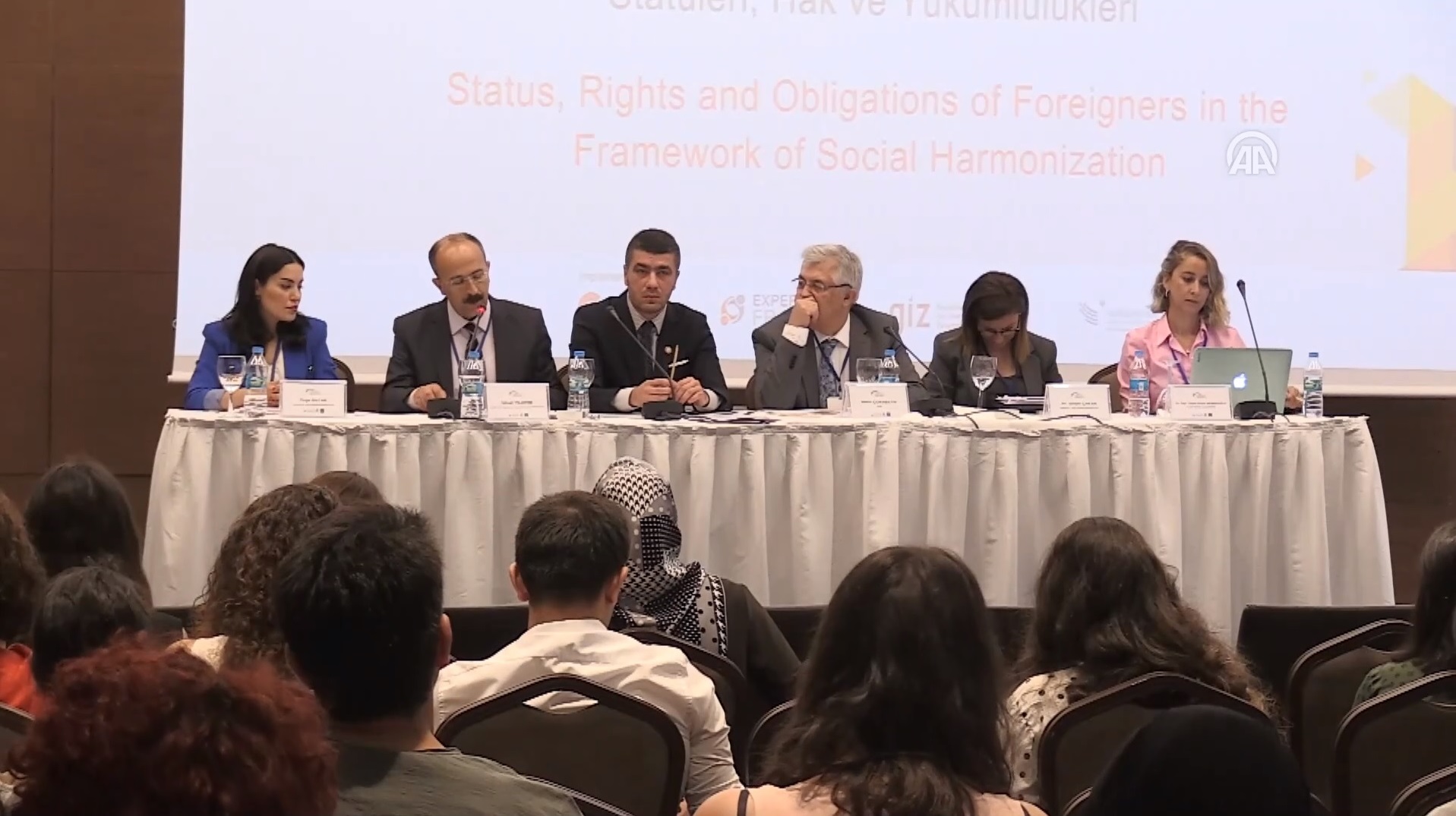
As part of this awareness, Governorate of Ankara, Provincial Directorate of Migration Management and Research Center on Asylum and Migration (İGAM) organized a Conference on Social Harmonization of Foreigners through Employment and brought together all relevant stakeholders. It was aimed to convene the representatives from the public and private sector, NGOs, academy, international organizations, foreign experts and refugees-foreigners around a table to discuss the challenges and opportunities for employment. The conference held on 27-28 June 2019 in Ankara, which was the first of its kind in Turkey received a great deal of attention. Problems concerning employment, legal legislation and other elements of harmonization, mainly employment and education were dealt with in detail. Strong support of the General Directorate of Migration Management helped open up such a sincere and transparent channel for discussion and provision of a solution.
This report constitutes the most significant output of the Conference. As the General Directorate of Migration Management, Governorate of Ankara Provincial Directorate of Migration Management and İGAM, we believe that the subjects taken up, shared good examples and the suggested possible solutions will guide the upcoming policies and projects, as well as the individuals who wish to conduct studies. Conference was organized with generous financial contributions of the Qudra Programme, a regional action co-financed by the European Union and the German Government and the Durable Solutions Platform. We would like to thank all participants of the conference, experts who moderated the panels and delivered speeches, stakeholders who shared good examples, distinguished moderators of the round table discussions and guests who made contributions. We are grateful to the estimable experts of the Governorate of Ankara Provincial Directorate of Migration Management Harmonization and Communication Department who carried out the preparations for months, our Project Coordinator Mr. Turker Saliji, our Project Assistants Mr. Kerim Can Kara, Ms. Janet Eke, Ms. İrem Aynagöz and Ms. Şebnem Belfin Baki, our editors Ms. Beste Türkoğlu, Ms. Melisa Pınar Dermibuğa and Ms. Rhyan Fritzel, and our rapporteurs Ms. Elif Özge Uslu and Ms. Büşra Efe for their efforts.
We believe that the conference and its report will shed light on the preparations of Turkey for the Global Refugee Forum to be held, co-hosted by the United Nations High Commission for Refugees (UNHCR) and Switzerland, to be jointly organized by Turkey, Costa Rica, Ethiopia and Germany on 17-18 December 2019 in Geneva, to which President of the Republic of Turkey Mr. Recep Tayyip Erdoğan confirmed their participation.

The phenomenon of migration, which is as old as the history of humanity, has never been so widespread and visible. In today's world, this phenomenon can now transform bilateral and regional relations by affecting security, national identity, sovereignty and power.
In this century, our country has carried out activities that can serve as an example to the world in the field of migration and has established its own legislation with Law no. 6458 on Foreigners and International Protection, which entered into force on 11 April 2013. Considering also the balance between human rights and security, our law, which complies with international law and agreements, has been successfully implemented from the day of its entry into force in our country, which currently hosts the highest number of foreigners.
Our law, stipulating the rights and obligations of foreigners and containing detailed provisions on practices that will be carried out in the field of migration, is also the law of establishment of our Directorate General of Migration Management which is also a civilian institution and aims to manage the phenomenon of migration with a staff specialized in the field of migration. Our Directorate General which, since its date of establishment, took over the affairs and procedures concerning the foreigners in our country in the third year of the Syrian crises that started on 28 April 2011 started to be organized right in the middle of the Syrian crisis, and put into practice the Temporary Protection Regulation that was enacted by the Council of Ministers just six months after its establishment.
Despite the high number of foreigners arriving in our country as a result of the Syrian crisis, it has great achievements in all areas of migration such as International Protection, Temporary protection, Residence permits, Combating Irregular Migration, Protection of Victims of Human Trafficking, etc., and completed its organization in 81 provinces following a period as short as 1 year.
Ankara Provincial Directorate of Migration Management, one of the 81 provincial organizations of our Directorate General, has started carrying out the work and implementing procedures within the framework of the instructions stipulated both in our law and by our Directorate General since 18 May 2015, and continues its operations with unchanged dedication with its expert staff.
We are handling the issues such as the foreigners’ access to healthcare, education and labor market with a rights-based approach in all our transactions. We are aware of the fact that depriving someone of the right to education and employment will create lost generations. It is essential that foreigners are able to maintain their lives as individuals who can protect their basic life skills in the society, both for our country and for the countries where these people will go back to.
Within this framework, our Directorate General and provincial organizations are intensively carrying out activities with the same sensitivity and diligence in order to facilitate social harmonization of foreigners in our country during their period of stay in our country, along with the necessary assessments in terms of both ensuring their access to rights and services and ensuring public order and security.
In Ankara province, however, harmonization activities are basically performed in the form of intensive information and awareness-raising studies. In this field, the foreigners are provided with necessary information about the rights they have during their stay in our country, as well as their obligations, access to services and the manners, customs and traditions of the society they live with. Besides, necessary studies are carried out against any possible xenophobia and racism that might be caused by any misinformation in the eyes of our society; and in particular, information activities are performed intensively at the provincial, district and even neighborhood level, through the elimination of false facts.
In all our social harmonization efforts, we have been carrying out work together with many non-governmental organizations and universities along with the support of our Directorate General, Governorate and other public institutions, and are aiming at executing the harmonization process in a healthy manner.
We have been maintaining the social harmonization process without ignoring the issues of overcoming the language barrier, establishing intercultural interaction, and the contributions of participation in education and working life, and have been engaged in efforts in this field. In the end, the present conference on Social Harmonization of Foreigners Through Employment is one of the most concrete examples of this.
I would like to thank our Directorate General of Migration Management and Governorate for not sparing their support for us in this comprehensive and valuable study, IGAM team and personnel of our Directorate with whose cooperation we have realized this conference together in a harmonious manner, as well as all other institutions and organizations which have enabled putting into practice of this conference for their efforts, and wish you all continued and fruitful works.
Conference on Social Harmonization of Foreigners through Employment was performed starting with opening speeches and followed with Four Panels, presentation of good examples and four round table meetings of wide participation. Panel topics were organized in a certain logical sequence. In the 1st Panel with the theme of the Statuses, Rights and Responsibilities of the Foreigners in Our Country within the Scope of Social Harmonization, three experts from the General Directorate of Migration Management and an expert from the Ministry of Family, Labor and Social Policies talked about the working conditions, legislation and practices of the Syrian and non-Syrian foreigners from the perspective of the public institutions directly related with the topic. Academic participant who took the floor in the same panel made an evaluation of the concept of harmonization in the framework of international academic approaches. Talking about the employment of refugees and foreigners, its relation with education cannot be neglected. Therefore, the second panel of the Conference was allocated to the speeches and discussions under the theme of “Importance of Turkish Language Teaching and Vocational Education within the scope of Harmonization”. Panelists who are representatives of the public sector, NGOs and academicians noted that the obligations for the Syrians to work impeded their education and they would be guided towards vocational training courses and institutions, in an attempt to overcome this situation, where they could continue working and studying at the same time.
Registered employment opportunities that the refugee graduates who had studied in the universities in Turkey can have in terms of qualified labor force have been taken up in the third panel entitled “Participation of University Graduate Foreigners and/or Those Having a Profession to Employment and the Foreigners Who Have Graduated from the Universities in Turkey”. In an environment where the paid and registered employment opportunities are limited, opportunities for the refugees to establish their business or develop alternative means to generate income gains importance. With this idea in mind, fourth Panel of the Conference was entitled “Alternative Job Opportunities for Foreigners in Turkey: Entrepreneurship and Social Cooperatives".
The part where the representatives of various NGOs and employer associations summarized the examples of good practices, specified the need for creative ways to increase employment. Examples of good practices were preparatory for the selection of the examples of good practices that can be shared in the Global Refugee Forum meeting to be held in Geneva on 17-18 December 2019 pursuant to the Global Refugee Agreement signed by about 180 countries in December 2018. Round Table Discussions were also held with the participation of almost all stakeholders and in four groups. Round table discussions were held in a semi-structured manner with a wider and free participation. Themes of the round table discussions were identified in parallel with the themes of the panels. In this way, it was aimed to offer possible solutions in the form of joint discussion and brain storming to the problem areas that emerged during the panel speeches.
Large summary of the speeches, deciphering of the recordings and the notes of the rapporteurs were compared and conveyed in the following parts of this report authentically, as much as possible. In order to minimize the possible errors such as misunderstanding and misquotation, these texts were shared with each speaker and were subjected to a “self-approval” process.
Fundamental principle of the Conference on Social Harmonization of Foreigners through Employment was to discuss the problem of ensuring harmonization of the foreigners with different statuses within the scope of the Law on Foreigners in Turkey and International Protection with the Turkish community by means of employment within the framework of the universal documents of human rights, international refugee law and the relevant rules of the national law, specifically the Constitution. Although the participants presented different approaches, they all noted that the four elements below would be efficient for the success of the harmonization policies:
1. General structure of the Syrian refugee population in Turkey distributed in the provinces and regions, as there are differences in terms of the educational-cultural levels, work skills, ratio of genders; ratio of children-adults, men-women, the elderly-young;
2. The capacity, distribution of employment and sectors and unemployment rates in the cities where the refugees have settled;
3. Legislation regulating the working conditions;
4. Current economic structure of the country, inflation, unemployment and foreign exchange fluctuations.
As known, Articles 6 and 23 of the Universal Declaration of Human Rights stipulates that everyone has the right to work and the freedom to unrestrainedly choose the job he/she will perform without any discrimination. In part three of the Convention relating to the Status of Refugees dated 1951, the issues regarding the right to work have been taken up under the title of “Gainful Employment”. Article 17 is on wage-earning employment, Article 18 is on self-employment and Article 19 is on liberal professions. According to these Articles, it has been specified that the country of residence is required to provide the conditions for the refugees who reside in the country legally to work in their respective areas and operate their business. Also, it is stated that the contracting state is required to provide refugees the opportunity to work under the most appropriate conditions in a way that the citizens of that country do. Part 3 Article 6 of the United Nations Convention on Economic, Social and Cultural Rights regulates that the contracting states vest the right for all to work in a job that they choose, and Article 7 regulates the right to benefit from fair and favorable working conditions. Article 18 of the European Social Charter includes regulations concerning ensuring equal working conditions and Article 19 includes those regarding the protection of migrant workers and their family members. Although the theme of the Conference is employment as an instrument for social harmonization, nonetheless panelists and speakers talked about the links of employment with education, language teaching, legal legislation, health, access to social services and accommodation sectors, as well as its interwoven nature with the issues of children’s rights and gender equality.
In the Conference, international refugee law, the right to labor, and especially the regulations concerning the right to labor in the European Union countries and opportunities and examples that the relevant legislation, especially the Constitution in Turkey creates were compared. Provisions of the Convention relating to the Status of Refugees dated 1951 were touched upon which prohibits discrimination and envisages pursuing policies ensuring equality, and sometimes more tolerance, to the refugees, citizens or foreigners in the most advantageous condition. It has been reminded that the legal legislation of Turkey is compliant to the universal norms in terms of the Constitution, international fundamental human rights law that Turkey is a party to and the general framework of its national legislation aligned thereto. It has been stated that the State of the Republic of Turkey is a party to the universal agreements on the right to labor, which is a universal right.
National framework on the right to labor has been summarized by the Conference participants, as follows:
Everyone has the freedom to work and conclude contracts in a field of his/her choice in accordance with the Constitution (Article 48). However, Article 16 of the Constitution regulates that the fundamental rights and freedoms of the foreigners may be restricted with the law in accordance with the international law.
In terms of access to labor market, the Article 89/4 of the Law on the Foreigners and International Protection specifies that “Applicant or the conditional refugee may apply for obtaining work permit six months from the international protection application”. In accordance with the Law, refugee or the owner of the secondary protection status may work as contracted or self-employed once he/she obtains the status. The identity card to be issued to the refugee (defined in Article 61) or the owner of the secondary protection status (defined in Article 63) also serves as the work permit.
However, when the issues are reduced to the rights of the foreigners under international protection in a similar situation with the conditional refugees and the individuals who benefit from the temporary protection, it has been noted that there were significant gaps that needed to be eliminated in terms of an ideal harmonization policy, despite the legal and administrative reforms that Turkey has carried out concerning the refugee/international protection regime from 2013. Restraining and challenging rules and practices have been especially highlighted in the area of access to employment, which is the main conference theme.
It has been highlighted that it was necessary to constantly monitor the policies of harmonization/integration and access to employment and the change that they create by means of the methods developed by the organizations like Belgium-based “Migration Policy Group”, and evaluate the outcomes for ensuring corrective interventions.
No one in the world expected that the incidents that started with demonstrations against the regime in Syria in 2011 and turned into a civil war in a short while would go on for nine years. In this respect, Turkey had the tendency of providing “Temporary Protection”, as Syrians entered to Turkey en masse, based on the Temporary Protection Clause regulated in the Article 91 of the Draft Law on the Foreigners and International Protection in 2011, which was not passed into law by then. Temporary protection status of the Syrians was made official with the regulation passed following the approval of the Bill of Law on the Foreigners and International Protection in the Parliament and publication of the same on the Official Gazette (2013). In this framework, the services that Turkey provided for the Syrian refugees were based on the concept of “temporary” until mid-2016. For example, accommodation model was determined as camps, education was attempted to be provided by the temporary education centers and the opportunity to obtain work permit was provided. However, as the crisis extended, it directed Turkey and supporting international community to adopt permanent harmonization policies.
In terms of permanence, there has been a consensus at the Conference that the overwhelming majority of the Syrian refugees under temporary protection in Turkey may go back home on voluntary basis, as the conditions in their country which resulted in their refugee status disappear; however, it might take years. As a result, it has been noted that the harmonization of the refugees and the host community is indispensable for the development of the country, welfare of the individuals and economic stability. In this regard, the importance of the social harmonization for employment was emphasized, along with its other elements like education. It was reminded that the forced migration movements were not a new phenomenon for these territories, and the land of Anatolia had seen serious and massive flux of migration in all historical periods. It was noted by the speakers that the strength of Turkey in the endeavors to overcome this humanitarian crisis as the country that hosts the largest number of refugees in the world at present could be attributable to its lengthy history of migration. As a result of the positive point of view that the massive migration movements in history created in the political and social culture of the country, it was stated that around 4.8 million foreigners from 192 nationalities benefit from the right to live without fear, having international protection or temporary protection status or the residence permit in Turkey, today.
Another important point highlighted at the Conference was that Turkey has not only been exposed to forced migration and irregular migration flux in the recent years, but also the number of those who entered to the country by regular migration movements and settled in Turkey with residence permit, as a result of the enhanced political and economic stability, reached to one million. However, it was argued that the number of irregular migrants also increased, and the number of irregular migrants that could be detected has reached up to 200 thousand in the recent years.
Also, the international organizations that were represented in Turkey pointed that there is a need for further solidarity with the countries that provide protection to large number of refugees like Turkey. They believed that the Global Refugee Agreement that was signed in late 2018 would serve this purpose, they noted. Delegate of the United Nations High Commission for Refugees who took the floor at the Conference said: “The number of displaced people increased by 2 folds when compared to 20 years before. 70.8 million people fled from their countries due to the reasons such as war and forced displacement and half of them were children. Syrian crisis has been ongoing for 8 years. Turkey hosts 3.6 million Syrians. This amounts up to 4 million people with the refugees coming from other countries. This conference is very important for them to be integrated with society. Many thanks to the Turkish community and state for their generosity. UNHCR also supports the communities that Turkey hosts. There are pressures imposed by the refugees coming to Turkey. Also, support is provided for eliminating such pressures.”
It was emphasized in the Conference that harmonization was a reciprocal phenomenon, and it was suggested that needs-based approaches should be considered when policies were determined since migrants and refugees do not constitute a homogeneous group. Also, it was argued that harmonization policies had various actors and the importance of providing opportunity for the local community and refugees to participate was highlighted, as these policies are developed.
Some international panelists also noted that the participation of refugees to economy was critically important for self-sufficiency and sustainability. It was emphasized that Turkey managed to be more reasonable and flexible when compared to the harmonization policies of Germany, which constantly tends to make regulations. It was expressed that full integration of refugees and migrants to the German labor market could take up to five years, according to a research by OECD.
Experts from the General Directorate of Migration Management who took the floor in different parts of the Conference noted that the migration management system of Turkey was established in 2013 by the Law no: 6458, and numerous serious and critical subjects including the prevention of irregular migration, supporting regular migration, international protection, registering and status operations related to the temporary protection were covered particularly in the early periods. Experts said: “To us, the issue of harmonization is important and we talk about the subject of harmonization since we know that the migrants are much more to the recently given statistics. Actually, every single individual among 4.8 million people bring in their luggage their experiences, pasts, cultures, pains and hopes to our country.”
On the other hand, it was also suggested that being a part of the working life could have an effect on the individuals to overcome post-war trauma in a rehabilitative manner.
It was specified in the Conference that registered employment of the Syrian refugees was regulated by the temporary protection regulation no: 6883 and the preliminary conditions and operations required for a Syrian to obtain work permit were summarized as below:
- To have a temporary protection identity card for a minimum period of 6 months;
- To sign an employment contract with the employer;
- Employer to enter the details of the foreigner with Syrian nationality to be employed in e-State account and upload the portrait photograph of the foreigner as well as the concluded contract to the e-State account.
It was noted by the speakers in the Conference that the authority to issue work permit was the Ministry of Family, Labor and Social Services, and some restraining rules were mentioned such as the number of people under temporary protection that are intended to be employed in a work place should not exceed 10% of the workers who are Turkish citizens in the same work place, working in some fields of profession requires preliminary permission and permission cannot be obtained for working in another work place at the same time. It was noted that the maximum period of work permits was 1 year and there were provisions of making an application two months in advance for the renewal of the same. It was pointed that the legislation regulating the working life included additional restraining rules in the fields of health and education, as well.
Other restraining and complicating practices in obtaining work permit were expressed by different speakers, as below: Syrians who have been present in Turkey for minimum six months under temporary protection can be registered to the Provincial Directorates of Labor and Employment Agency as “job seekers” with their identity cards that evidence this situation; at the registration phase, the Applicant is given the registration document including his/her identity details, which is valid for thirty days, specifying that he/she has applied for the international protection; Registration document may be extended for periods of 30 days if necessary; Registration document provides the opportunity for the applicant to stay in Turkey and it is free of charge.
The Laws include opportunities for the provision of information, attorney, and fundamentally, translation.
It was reiterated that one significant restraint for access to employment was the provisions regarding the freedom to travel. Article 71 regarding the residence obligation and the responsibility of notification under the regulation concerning work permit, envisages that the applicant can be imposed with the obligation to reside in a province or at an acceptance and accommodation center indicated. In parallel, under Article 82 that regulates the residence of the conditional refugee and the owner of secondary protection status, obligation is imposed to the conditional refugees and the owners of the secondary protection status by the General Directorate of Migration Management to reside in a certain province and make notifications within specified periods following certain procedures, due to public order or public security concerns. They are obliged to register in the address registration system and notify their residence address to the Governorate. However, an identity card for a period of three years that has the foreigner identity number is issued to those given the refugee status, while an identity card for a period of one year that has the foreigner identity number can be issued to those given the conditional refugee and secondary protection status.
Some of the speakers at the conference expressed that the problems associated with obtaining work permit are among the most significant factors that instigate non-registered employment.
Direct links between education and harmonization and access to working life were touched upon in the Conference. In this respect, the measures taken by the Government were shared in detail by the participants representing the public institutions; on the other hand, difficulties and obstacles were also mentioned. In addition, it was noted that 643,058 (61.39%) school-aged children out of one million Syrian children have been included in teaching & learning system.
Importance of the Public Education Centers for the training of Syrian refugees was reiterated and it was expressed that 3487 training modules in hundreds of different areas were prepared to be used by a total of 993 public education centers. Until now, in total, 34,900,579 people have been provided with educational opportunities at these centers considering different age groups and regional requirements, according to the data provided. Also, it was noted that these institutions, to which especially the women and disadvantaged groups access easily and where these people can receive information and education in any field they require, have undertaken an important role in education of the Syrian adults as well. Participants in general argued that the failure to learn and understand the Turkish language actually mean the failure to understand the rules and regulations. Although İŞKUR had not included language teaching in its activities since its establishment in 1946, it was stated that the situation changed with the Syrian crisis. It was noted that a good understanding of the rules and regulations required having learnt the language of that country, and the failure to speak the language created a great obstacle for harmonization. Also, having learnt the Turkish language prevented the exploitation of the Syrians who worked during their working life; and in this way one could claim his/her rights, talk to the employers and develop skills to manage his/her problems.
It was expressed during the speeches that the importance of the vocational high schools and vocational education centers increased in the education policies of the Government, and in consequence, it became possible for the Syrians to work and study at the same time.
It was suggested in the Conference that vocational education was an opportunity for employment and social harmonization, and it was agreed that many vocational courses provided under numerous projects failed to make a considerable contribution to the registered employment due to the difficulty of obtaining work permit.
It was expressed that it was theoretically possible for the Syrians to establish business and contribute to the Turkish economy; however, the Syrians who would like to establish business in Turkey were confronted with some difficulties. It was specified that in the interviews conducted with Syrian refugees and Turkish employers, it was argued that establishing business in Turkey for the Syrians in Turkey was much more complicated than doing so in Syria.
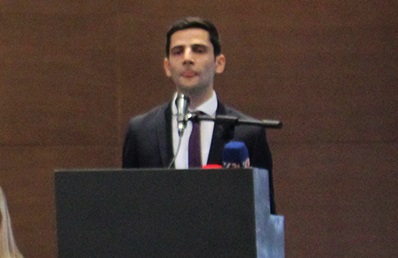
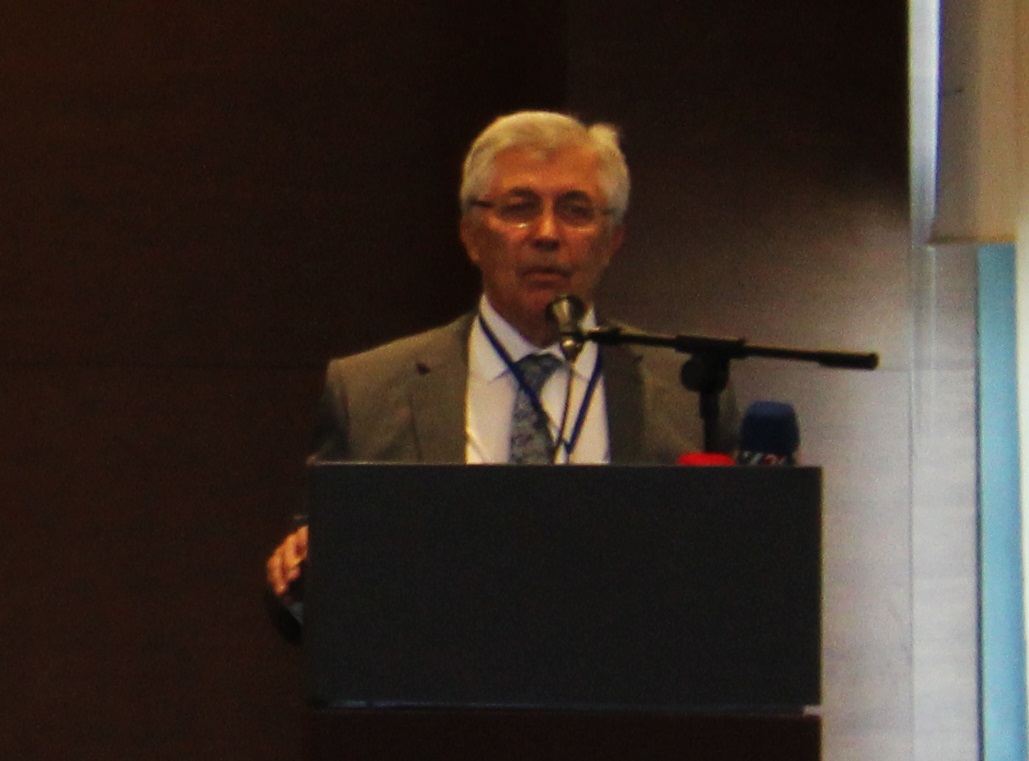
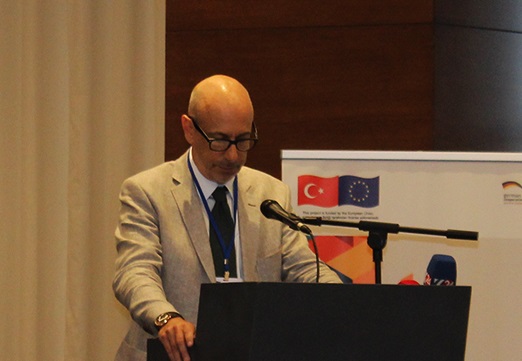
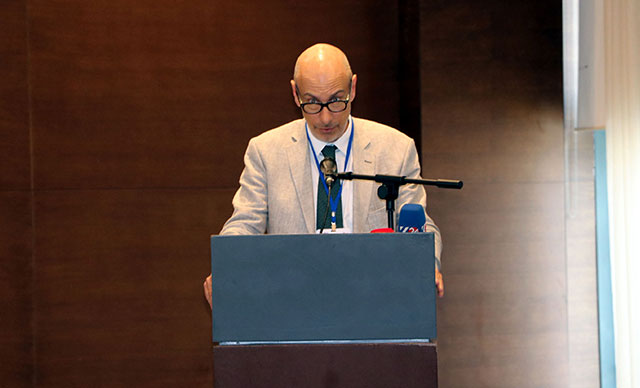
Birleşmiş Milletler (BM) Mülteciler Yüksek Komiserliği (UNHCR) Türkiye Temsilcisi Yardımcısı Jean Marie Garelli, "Türkiye 3,6 milyon Suriyeliye ev sahipliği yapıyor. Türkiye yasal çerçevelerle mültecilere iş kurma, eğitim, sağlık hizmetleri verdi. Bu dünyaya örnek olmalı. Türkiye halkına ve devletine bu cömertliği için teşekkürler" dedi.
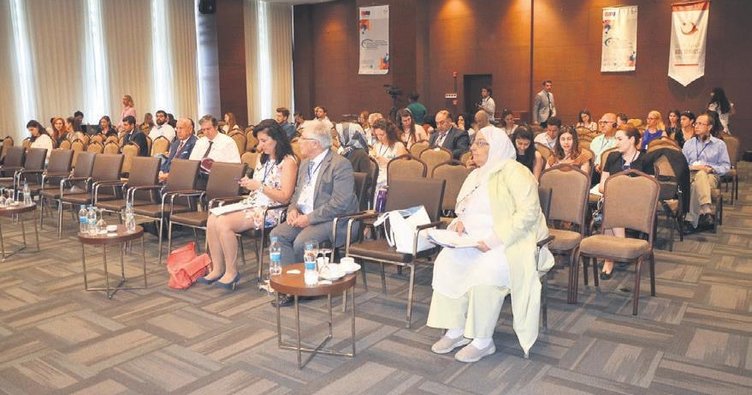
ANKESOB Başkan Vekili Hüseyin Ar, “ANKESOB olarak, ülkemize göç etmiş yabancıların girişimci olmasını ve işyeri açmalarını, hizmet eden, üreten insan olmalarını önemsiyoruz” dedi
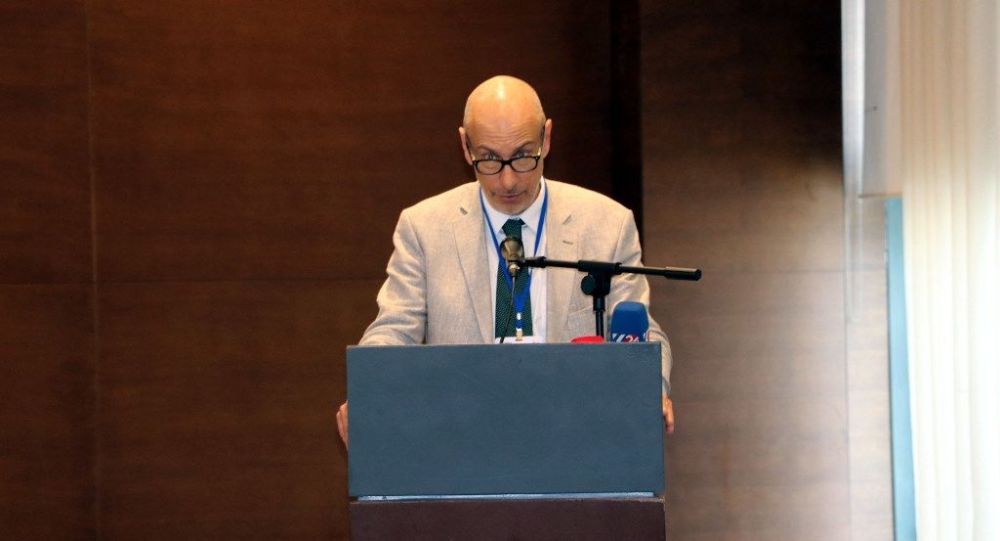
Birleşmiş Milletler Mülteciler Yüksek Komiserliği (BMMYK) Türkiye Temsilci Yardımcısı Jean-Marrie Garelli, "Türkiye 3.6 milyon Suriyeliye ev sahipliği yapıyor. Türkiye yasal çerçevelerle mültecilere iş kurma, eğitim, sağlık hizmetleri verdi. Bu dünyaya örnek olmalı. Türkiye halkına ve devletine bu cömertliği için teşekkürler" dedi.
Birleşmiş Milletler (BM) Mülteciler Yüksek Komiserliği (UNHCR) Türkiye Temsilcisi Yardımcısı Jean Marie Garelli, "Türkiye 3,6 milyon Suriyeliye ev sahipliği yapıyor. Türkiye yasal çerçevelerle mültecilere iş kurma, eğitim, sağlık hizmetleri verdi. Bu dünyaya örnek olmalı. Türkiye halkına ve devletine bu cömertliği için teşekkürler" dedi.